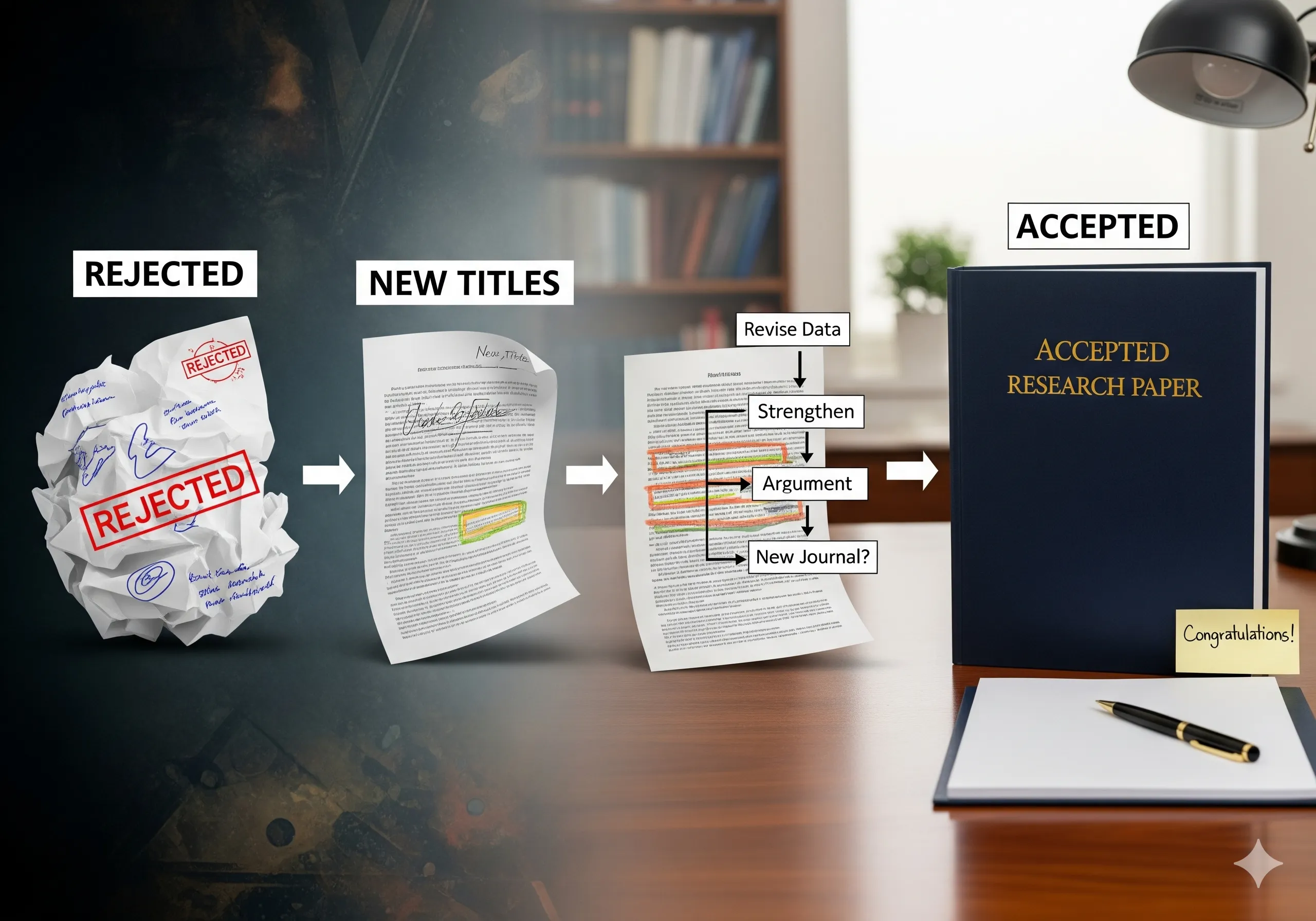
In academic publishing, rejection is not the end of the publication journey. In fact, most successful researchers face rejection at least once before achieving acceptance in leading journals. What separates those who eventually publish from those who give up is not luck, it’s resubmission strategy. Specifically, a resubmission strategy that turns reviewer feedback and editorial comments into a roadmap for success.
At Mars Publications, we offer Resubmission Support Services that assist scholars in editing manuscripts, responding well to criticisms, and optimising their resubmission prospects. Through this guide, we discuss how resubmission strategy is more important than you imagine and how professional assistance can turn rejection into publication.
Rejection Isn’t the End, Think of a Resubmission Strategy
Each journal gets many more submissions than it can print. Even good research may be rejected due to:
Formatting or language problems
Not clear enough in argument
Methodological issues raised by the reviewers
Incompatible with journal scope or readership
Not responding adequately to previous reviewer comments
Rejection, therefore, is seldom a sign of bad research. It is often an indication of areas for enhancement. A reflective resubmission plan ensures the gaps are plugged before attempting again.
Importance of a Resubmission Strategy

1. Converting Criticism into Opportunity
Reviewer and editor criticism is a blueprint for improving your paper. Rather than seeing them as barriers, a good plan converts criticism into focused revisions that leave your manuscript more robust.
2. Selecting the Best Journal to Resubmit
All journals are not created equal. A manuscript rejected by one publication can be a great match for another. An intelligent resubmission plan considers scope, impact factor, and audience fit to determine the optimal next choice.
3. Refraining from Repeat Errors
Authors who are in a hurry to resubmit without fixing major problems are likely to be repeatedly rejected. A good plan makes sure every weakness seen—be it in structure, clarity, or formatting—is fixed before submission.
4. Professional Credibility
Editors value authors who positively respond to rejection. A professionally prepared resubmission package exhibits professionalism, resilience, and a dedication to academic excellence.
Strong Resubmission Strategy Components

Careful Reading of Feedback: Organise reviewer comments into significant revisions (methodology, data interpretation) and trivial revisions (grammar, references).
Manuscript Revision: Answer issues point by point, making sure they are clear, coherent, and meet the journal’s standards.
Writing a Persuasive Cover Letter: Clearly outline how you dealt with feedback and why your manuscript is now ready for publication.
Target Journal Selection: If resubmitting to another journal, tailor your manuscript to match its scope and submission guidelines.
Proofreading and Formatting: Make sure the rewritten version complies with technical standards. Slip-ups in formatting frequently initiate desk rejections.
External Review Prior to Resubmission: Professional resubmission assistance offers impartial critique, picking up on mistakes you might overlook.
Rejection to Acceptance: Resubmission Strategy by Mars Publications

A researcher authors an article on alternative energy solutions for submission to a leading engineering journal. The critique mentions good methodology but presentation that is not clear and inconsistent references. The article is rejected.
Rather than giving up on the project, the researcher joins Mars Publications’ Resubmission Support Services. Our editors rearrange the manuscript, refine the writing, fix references, and draft a compelling response letter. Upon resubmission to a more suitable journal, the article is accepted with small changes.
This makeover illustrates why a resubmission process can be more critical than the initial submission.
How Mars Publications Facilitates Resubmission?
We know how frustrating rejection can be. At Mars Publications, our Resubmission Support Services help give authors a second chance, supported by resubmission strategy and expertise. Our services include:
Reviewer Comment Analysis: Unpacking feedback in a workable plan of action.
Manuscript Revision Support: Language polishing, reorganisation, and formatting to journal standards.
Journal Selection Guidance: Steering you to the journals where your research is most likely to be accepted.
Cover Letter and Response Drafting: Professional, compelling documents that highlight your changes.
Final Submission Review: A thorough review to make sure your manuscript is flawless and ready.
FAQs on Resubmission Support Services
1. Should I resubmit to the same journal or attempt a new one?
It varies. If the feedback is constructive and positive, resubmitting to the same journal is prudent. If the rejection is on grounds of scope, aiming at a new journal might be more appropriate.
2. How long do I need to wait before I resubmit?
There is no one-size-fits-all guideline, but hurrying tends to result in repeat rejection. Take enough time to address every comment seriously before resubmitting.
3. Can resubmission support assure acceptance?
No one can promise acceptance. But professional resubmission service very much enhances your prospects by weeding out weak spots.
4. Is resubmission only for rejected manuscripts?
Not necessarily. Some writers use resubmission service even when invited to make major revisions so their response package is in good shape.
5. Are my research and data kept confidential?
Yes. At Mars Publications, all manuscripts and correspondence are kept confidential.
Rejection from academic publishing is not failure feedback. The real test is how the researchers react. With a sound resubmission strategy, each criticism is a chance to polish, improve, and eventually publish your research.
Through our Resubmission Support Services at Mars Publications, we offer the skill and framework you require to convert rejection to acceptance. With the integration of subject matter competence with editorial accuracy, your manuscript becomes more robust, refined, and strategically positioned for success.
Don’t let rejection hold you back from an academic career. With an expert resubmission strategy, your research can still find the audience it should.