
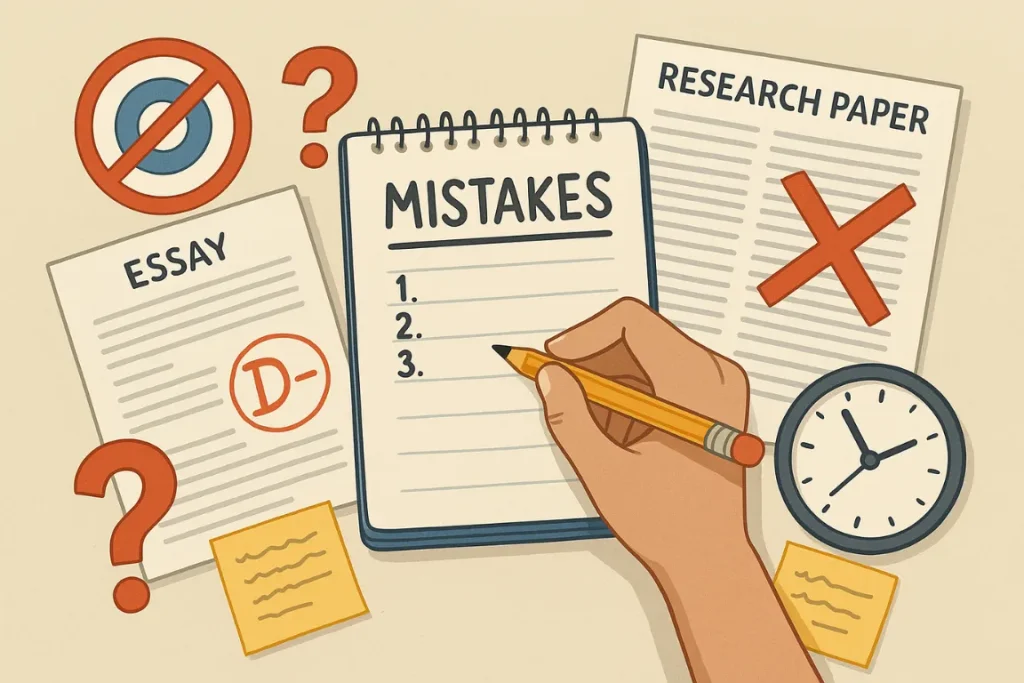
Publishing a manuscript is usually the fruit of years of studies, hard work, and determination. However, even with the excellence of their work, numerous researchers receive rejection letters due to common mistakes in the submission process.
At Mars Publications, we regularly come across instances wherein manuscripts with high potential are delayed or rejected owing to mistakes that could have been avoided with proper preparation. To guide researchers through this step of utmost importance, we discuss common mistakes researchers make when submitting manuscripts and tips on how you can prevent them for better opportunities to be successfully published.
1. Ignoring Journal Scope and Aims
Among the most common causes of rejection is sending a manuscript to a journal whose scope is not congruent with the research theme. Even revolutionary research can be rejected if it doesn’t cater to the scope of the journal. Instead, read the Aims and Scope section of the journal attentively. Check recent publications to determine if your work matches their readership. We counsel authors at Mars Publications on journal choice to achieve congruence prior to submission.
2. Ignoring Author Guidelines
Each journal has clear submission guidelines and style instructions. Authors must submit work complying to the guidelines. Authors should Re-read and follow submission guidelines such as following reference style, word counts, and file types. Engaging professional editing services like that of Mars Publications can help improve acceptance rates.
3. Submitting Unedited Manuscripts

Even excellent research is rejected when submitted with grammatical mistakes, unnecessary wordings, or ambiguous expressions. A poorly written manuscript may give the impression that the writer was sloppy despite excellent research. Spend on language editing and technical editing prior to submission. Make certain there is clarity, logical flow, and accuracy. Mars Publications offers expert editing for research publication, allowing authors to publish their work confidently.
4. Poor Titles and Abstracts
The title and abstract are your paper’s first lines of communication with reviewers and editors. Most researchers don’t make an effort to create interesting, clear, and informative abstracts, and as a result, there are miscommunications regarding the breadth or focus of the paper.
5. Manuscripts with Poor Structures
A manuscript lacking a logical structure or organisation is challenging for the reviewers. Truncated sections (e.g., methods, results, or discussion) or incoherent presentation are common reasons for rejection. Use the IMRAD format (Introduction, Methods, Results, and Discussion) except where otherwise indicated. Use concise headings and subheadings. Seek manuscript review assistance to tighten structure prior to submission.
6. Overlooking Ethical Requirements
Failing to provide ethical approvals, informed consent notices, or conflict-of-interest statements is another mistake. Journals consider research ethics to be of utmost importance, and leaving out such details can lead to rejection outright. Always mention ethics approval numbers in human or animal studies. Indicate sources of funding and possible conflicts of interest. Remember transparency enhances credibility.
7. Inadequate Literature Review and References
Reviewers frequently reject submissions if the literature review is out-of-date, incomplete, or off-topic. Wrong citation formats or omitted references are also common problems. You can Avoid this by making sure your references are up-to-date and relevant. Use the exact citation style demanded by the journal (APA, MLA, Vancouver, etc.). Utilize reference management software such as EndNote, Mendeley, or Zotero.
8. Rushing the Submission Process
Most authors, waiting impatiently for their articles to be published, submit hastily without reviewing every aspect twice. This rush leads to avoidable mistakes like lost files, insufficient data, or improper formatting. Take time for a review in detail before submission. Ask supervisors or peers for comments. Mars Publications urges authors to undertake a pre-submission review to reduce errors.
9. Not Addressing Reviewer Feedback in Resubmissions
Even once reviewer comments have been received, some authors err by submitting without adequately responding to concerns. This drastically reduces the acceptability of their work. Authors can manage it by answering all comments properly and respectfully. Give a point-by-point response letter. Demonstrate evidence of changes in the manuscript.
10. Ignoring Professional Assistance
Many researchers underestimate the value of professional guidance in the publication process. Services like editing, formatting, journal selection, and submission support can save time, reduce stress, and improve acceptance chances.
Final Thoughts

Submitting a manuscript is not merely sending your research to a journal. It involves submitting your work in the best way possible while complying to the highest academic standards. By preventing these mistakes, you can increase your chances of acceptance enormously. At Mars Publications we collaborate with researchers to overcome these mistakes and simplify the path from manuscript to publication. From journal selection advice to professional editing, and even resubmission assistance, our services will assist you in achieving success.
FAQs
1. What is the most frequent error researchers commit in manuscript submission?
The most common error is overlooking journal scope and submission guidelines, which leads most often to desk rejection.
2. Can an author be rejected because of poor formatting?
Yes. Journals reject many manuscripts for poor formatting, regardless of whether research quality is high or not.
3. Is professional editing crucial to publishing research?
Very crucial. Editing for clarity, accuracy, and journal standards improves the chances of acceptance.
4. Do I always need to revise following reviewer feedback?
Yes. Careful and respectful response to reviewer comments is important for being able to resubmit successfully.
5. In what ways can Mars Publications assist me in evading rejection?
Mars Publications offers expert editing, journal choice, formatting, and submission services to assist researchers in evading common pitfalls and enhancing their publication prospects.