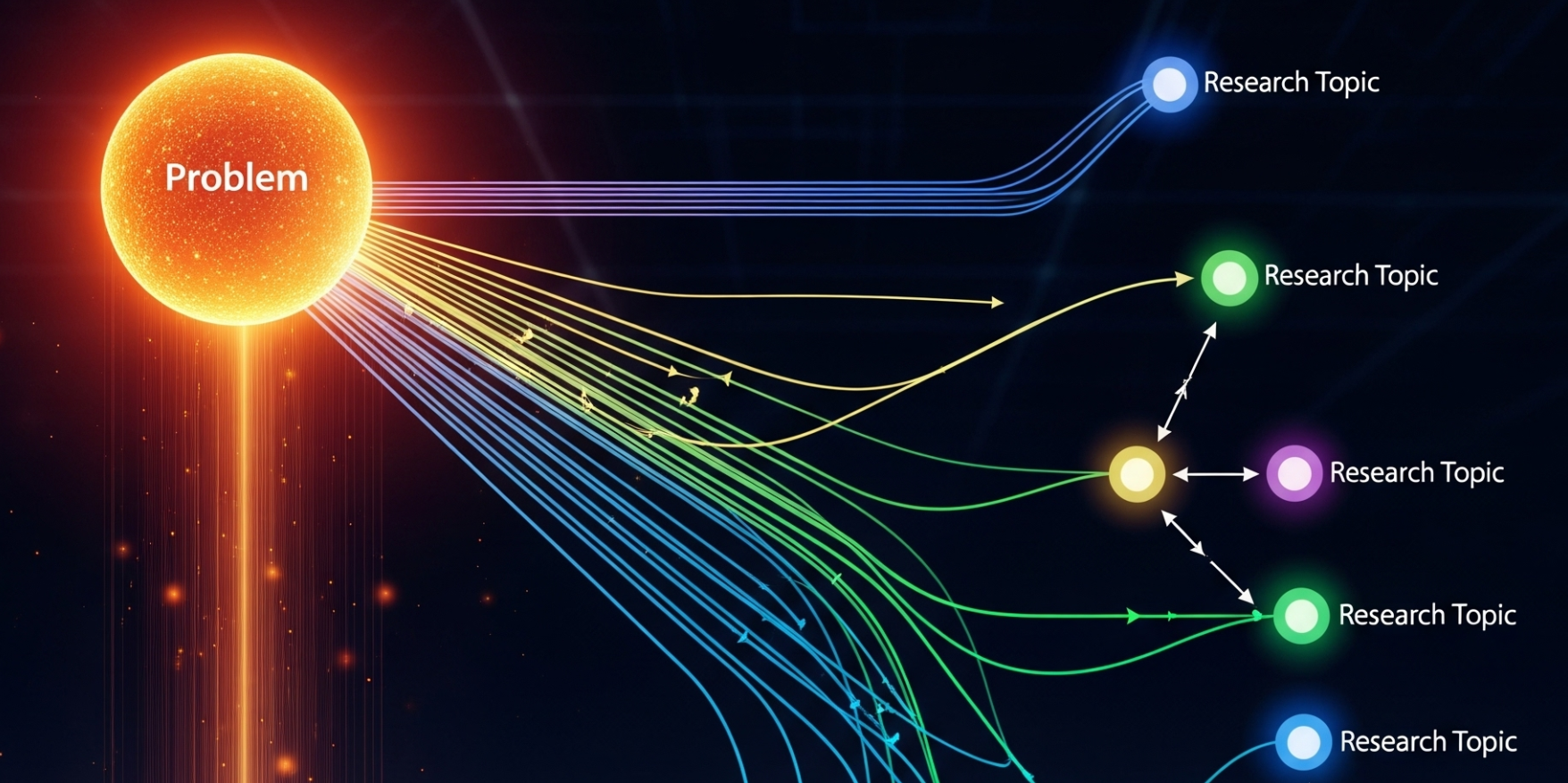
To many researchers, the greatest challenge is not the research itself, but recognising where to start. Choosing an interesting, timely and feasible research topic could be like walking without a map in a maze. Do not work on an item so thoroughly covered that there is little or nothing to add.
The result is time wastage and loss of motivation. The possibility of a manuscript being automatically rejected by respectable journals. It lacks either novelty or importance. The remedy to this is a more systematic, effective approach. Professional research writing services also take the Problem-Solving Approach. It helps scholars create a research topic that is both meaningful and relevant, as well as academically rigorous.
Understanding the Problem-Solving Approach
The problem-solving approach in research overturns the classical narrative at its core. Instead of starting with such a broad topic and finding a niche within it. Try finding a real-world problem that has no valid solution. The issue may be a technological malfunction with renewable energy systems. It can be a patient care policy gap, an unequal social situation that technology spurred.
Such an approach is where academic inquiry is directly connected with practical impact. So that the work is always rooted in necessity and will produce a clear and definite so what question. Focusing on a tangible issue, one is automatically defending against abstract or even trivial issues.
Problem-Solving Methodology Steps
This five-step process outlines a clear roadmap to transform an undefined field of interest into a narrow research question.
Step 1: Identify a Core Problem
The first thing is to train to be a skilled observer. Gaps, inefficiencies and unanswered questions in the field should be sought. It is recommended to engage with the industry news, professional conferences, case studies, and practitioners. What do existing pain points represent? What are the complaints professionals express at forums? These issues need to be recorded, and solutions are not to be thought of.
Step 2: Existing Research Analysis
Having noticed a potential problem, one should dive into the prior literature. This is not about being like each other but about understanding. A literature review should be performed systematically to identify previous methods and proposed techniques. It also requires a critical approach in order to detect the limitations, contrary findings, and, most importantly, the blank space. This is an analysis showing where the boundaries of existing knowledge lie. The exact position where the new research could be placed.
Step 3: Define the Research Gap
Such an analysis of the existing literature will naturally reveal a gap. The sweet spot in which you can contribute to the field. State the problem and the constraints. Put the problems and limitations into a formal research gap. This is the main principle of the research proposal and the introductory part of the future manuscript.
Step 4: Brainstorm
Having a well-understood gap, brainstorm specific questions that may answer the gap. Design open-ended questions in the form of how, what, why, or to what extent. Examples: What would an improved algorithm, given Z conditions, improve the effectiveness of the Y innovatively? What is the effect of policy X on demographic Y? Generate numerous options to be able to spend on a solid number of potential options.
Step 5: Refine and Select
Lastly, compare the list of questions to the important criteria. Evaluate queries on a case-by-case basis based on Novelty (offers a truly original idea?). Additionally, Feasibility (are resources, data, time, and expertise available to handle?). Moreover, Relevance (will the scholarly fraternity and society take it to heart?), and Scope (is it narrow enough to be addressed in a single project?). The question that best meets these criteria becomes the research topic of choice.

Advantages of the Problem-Solving Approach
The adoption of this methodology provides certain benefits that go beyond topic choice:
- Assures Relevance and Originality: Starting the work with an unsolved problem and a clearly outlined gap ensures that the work is original as well as necessary.
- Creates Practical Impact: The study has an inherent value outside academia, which makes it more appealing to financing organisations and industry participants eager to address real-life problems.
- Gain Publication: High-impact journals are far more likely to accept a paper demonstrating a clearly known problem and providing a new solution; the section of the manuscript where people can see the importance of it as a sort of self-evident fact.
- Presents a Clear Roadmap: A clear issue is like a guidepost in the entire journey of research, keeping one focused and logical in the literature review, research methodology, and discussion.
Common Mistakes to Avoid
Despite such an effective methodology, it is critical to be attentive to the following pitfalls:
- Choosing an Overly Broad Problem: A problem like climate change is overly broad; reduce it to a smaller and manageable segment, e.g., the inefficiency of current carbon capture systems in maritime transport.
- Lack of Literature: Lack of literature review results in the repetition of the wheel and a waste of time.
- Ignoring Feasibility: A question that is lured with insufficient resources is a sure formula for an incomplete project, and there is a need to honestly address constraints at the very beginning.
- Chasing Trends: When a researcher selects a topic based almost entirely on its being in the news (such as blockchain for everything), but lacks a real problem to address, it provides little incentive to go deep in research.
Conclusion
It is not an answer that initiates the direction to a successful publication, but a well-thought-out question. A question that arises due to problems as perceived in the real world. Applying a problem-solving approach, the scholars become contributors of knowledge who solve urgent problems.
At MarsPublications, we understand that making such influence-sculpting studies is an elaborate task. Our mission is to assist the scientists in their research process and guide them. We offer the best advice and resources from the final publication in the most respected periodicals in the world.