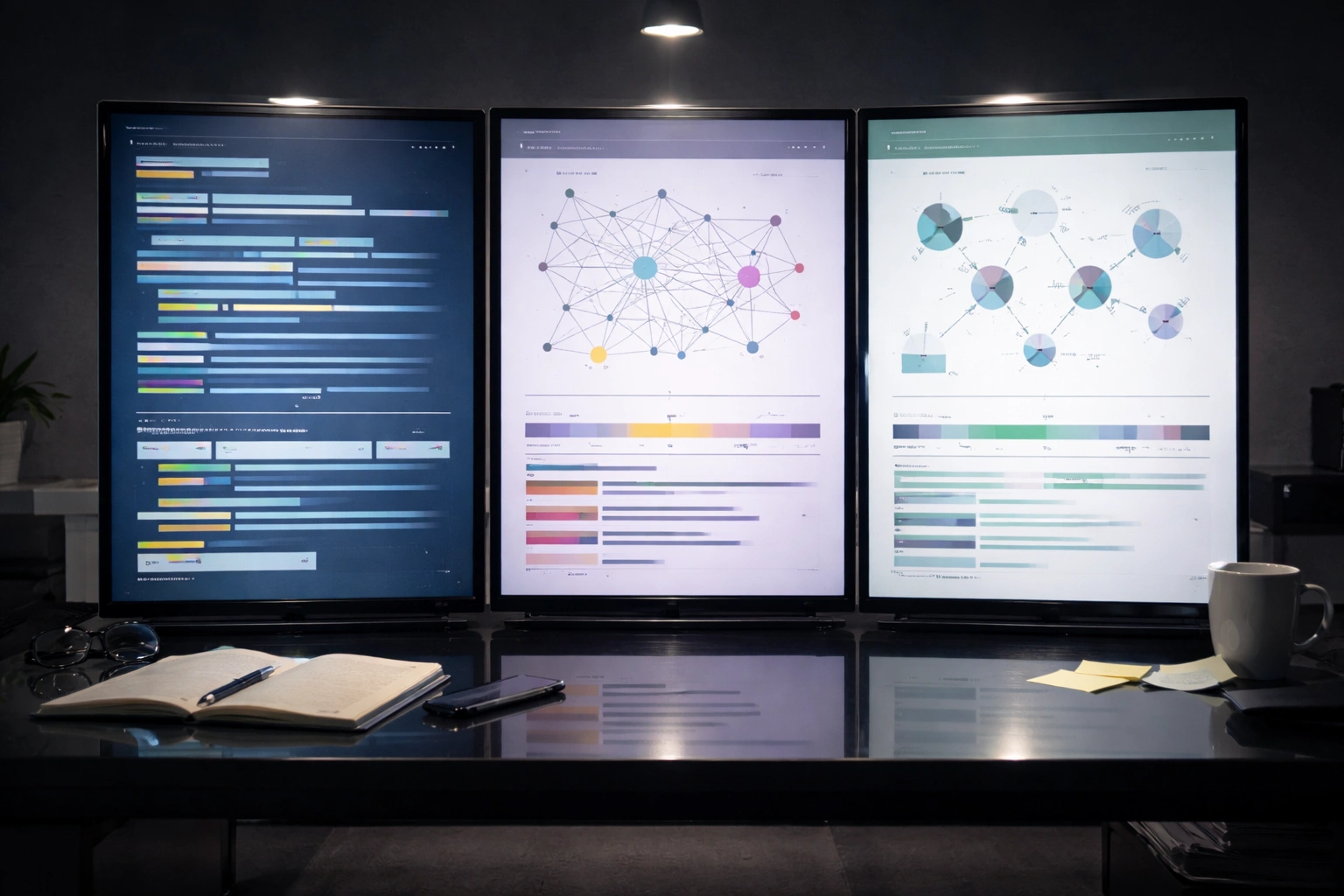
Selecting a qualitative analysis tool may be overwhelming. Both have loyal users, solid features, and a learning curve. The tool that suits your data types, team size, and reporting needs is the right one, not the one that looks the most impressive on a demo.
This guide contrasts NVivo, ATLAS.ti, and Dedoose based on experience in coding, collaboration, support of mixed methods, and publication. It even provides a selection checklist to assist in making a choice. A research workflow lens, which Mars Publications suggests, requires one to choose a tool that best supports the actual requirements of the project.
Who This Guide Is For?
Structured software options are useful to thesis writers, research teams, mixed-methods studies, and applied projects. When you publish in IEEE-style publications, you are likely to favour reproducible deliverables and articulate the execution of techniques. Such a comparison keeps such priorities in consideration.
Quick Decision Lens: What Matters in Qualitative Software?
Four questions to ask before comparison. It is important to ask four questions before comparing features.
- What data will you analyse: text, audio, video, or images?
- What is the size of your team, and how are you going to work?
- Is mixing of qualitative findings with quantitative data needed in your project?
- What will you communicate in your report/publication to your readers/publishers?
- Your responses will eliminate the range before even opening a trial version.
One Paragraph Tool Profiles
NVivo: Strengths and Common Fit: NVivo has rich tools of coding, high-power querying as well as organised results. It is normally selected by researchers dealing with large text volumes, mixed-methods or institutional research. Its project-management capabilities assist teams with alignment of its coded features to various users.
ATLAS.ti: Advantages and General Suitability: ATLAS.ti provides freedom of coding, visual gap linking between ideas and network-like explorations. Theorists who admire seeing relationships among codes and creating theory through an iterative process embrace the method. It applies to grounded theory and exploratory analysis.
Dedoose: Strengths and Common Fit: Dedoose is a browser-based application and emphasises collaboration in a team. It is employed by mixed-methods researchers to integrate qualitative codification and demographic statistics and simple statistics. Its simple interface is appropriate for distributed teams and projects that require access speed at multiple locations.

Feature-by-Feature Comparison
- Codebook Control and Coding Experience: NVivo is compatible with hierarchical coding, comprehensive code definition, and memos. ATLAS.ti, however, provides flexible coding and quick restructuring of the code. Dedoose has simpler drag-and-drop coding and less hierarchical depth. All the tools assist you in recording your codebook, although the experience is different.
- Search, Queries, and Finding Patterns: NVivo is capable of intricate queries, matrix coding and accessing coded data under more than one dimension. ATLAS.ti provides co-occurrence and semantic queries and visual networks. Dedoose offers some basic filters and word clouds, but less advanced queries. Consider the extent to which you have to challenge your data.
- Working as a Team and Project Management: Dedoose is the first web-based collaboration tool that can be accessed in real-time with commenting. NVivo offers the roles of teams and mergeable projects, but demands close control of files. ATLAS.ti facilitates the use of packages and synchronisation software in teamwork. Reporting checklists of the Mars Publications type usually demand a clear codebook and access logic. These are provided by all three tools, but in varying ways.
- Mixed Methods Support: Dedoose incorporates demographics and exports readily to statistical packages. NVivo associates the qualitative codes with case attributes and favours mixed-methods queries. ATLAS.ti is capable of managing document variables and may export coded data to be analysed outside of the system. When the text and numbers are integrated into your project, compare the way each tool can handle the combination.
- Multimedia Handling: NVivo and ATLAS.ti analyse the audio and video-rich media by transcribing and time-stamping. Dedoose does multimedia, however, with a smaller number of transcription tools. This difference is important when any of your data are long recordings or require a fine-media analysis.
Reporting, Reproducibility and Publication Requirements
1- Outputs You Can Actually Make in a Paper
NVivo can offer exports of codebooks, summaries of themes and quotation tables, which one can add to appendices. The ATLAS.ti produces both network views and quotation lists, both of which are publishable. Dedoose generates charts and the appearance of excerpts; however, they might have to be reformatted to be published in a journal.
2- Transparency: Audit Trail and Methods Write-Up
Each of the three tools allows recording of the coding decisions and theme development. The question is whether you use those features or not. Your codebook versioning and decision memos are defensible with saved codebooks and decision memos.
3- When does IEEE-Style Reporting Restarts the Priorities?
In technical audiences, clarity about the methods of description and evidence of traceable evidence of the themes is of utmost importance. Venues in the IEEE style require terse, summarised reporting. Exporting clean codebooks and getting coded excerpts quickly, without too much work on formatting, should be supported by your software.
Recommendations of Best Personnel by Project Type
- Self-presented Dissertation or Solo Workflows: When starting with the new system, focus on a light learning curve, stability and export of ready reporting. NVivo and ATLAS.ti have both had widespread support resources as well as long-term reliability in multi-year projects.
- Teams and Violent Collaboration: Value roles, commenting and version control. The interface that Dedoose offers makes distributed teamwork easier. The team features provided by NVivo are more configurable but more powerful in control.
- Applied lab Research, HCI, and Computer Science: Value reproducibility and the brevity of reporting usage typical of IEEE communities. Visual tools of ATLAS.ti are useful in presenting qualitative results to the technical audience. The query functions of NVivo enable rigorous validation of themes.
Checklist
If you want to be selected, there are things you can use to enhance your chances of success with this checklist.
- Consider these ten points first before selecting software.
- What information are you going to analyse?
- What is the size of your team and the location?
- Offline access or browser exclusively?
- To what level of complexity will your queries be?
- Will you combine both qualitative and quantitative data?
- What are the export formats of your reports?
Conclusion
Activity: Correctly match your software to your data, your team, and your reporting needs. NVivo is applicable in structured and complex query projects that require a codebook. ATLAS.ti is suitable for exploratory, visual analysis. Dedoose is used by teams that operate across sites, such as collaborative and mixed-methods teams.
Always ensure transparency in your coding process, regardless of the tool you use. Document your decisions. Be traceable in your analysis. When the programs you are using are defensible, your results have stronger ground.