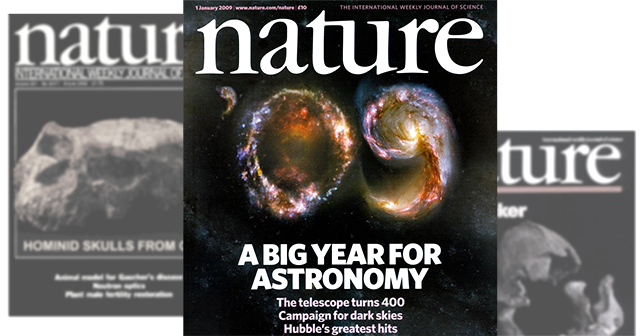
Would you like to learn which institutions are the most followed in the world regarding high-quality research? The Nature Index offers the solution. This database provides the affiliations of the authors of the articles published in a limited number of high-end journals. This data is compiled by Springer Nature through its Nature Research Intelligence. It presents a clear means to view the real motives behind scientific discovery.
What is the Nature Index?
The Nature Index is not any other ranking. It narrows down to a selection of 145 quality journals. These journals are selected by independent boards of active scientists. They are the highest ranks of the natural and health sciences. When you observe an institution on the high rankings on these tables, you are viewing a giant of international research.
The Ranking Process Count vs. Share
The Index causes the ranking of institutions and countries using two main measures. These are important to understand as a researcher or an administrator of a university.
Count (previously Article Count or AC): This measure is uncomplicated. The Count of 1 is awarded to an institution, when at least one author of a paper is employed there. Whether the paper has one author or one hundred authors do not matter. The Count remains 1. This is an indication of the frequency with which an institution engages in leading research.
Share (previously Fractional Count or FC): It is a more accurate measure. It quantifies the contributions of each author relative to other authors. The overall Share of each article is 1. When there are ten authors in an article, the authors will have a Share of 0.1. In case the author is affiliated to two institutions, the Share is divided. This avoids the problem of counting things twice and providing a better representation of the true output of an institution.
The Role of Springer Nature
Springer nature is significant in keeping this database. Although the index includes journals from a wide variety of publishers, the Springer Nature team handles the data collection. They ensure that the information is updated. They update the database on a monthly basis and publish yearly tables of Research Leaders. These tables demonstrate the changes in the world research situation, including the recent increase in the output of natural sciences in China.
What is the Importance of This to Your Research?
Top among the Nature Indexes is prestigious. It draws finance, talent and foreign partners. In the case of a research consultancy such as Mars Publications, we apply these metrics in assisting clients to pinpoint areas of gaps. We compare your institution with those all over the world.
Selection Process of Journals
What happens to journals in the Index? They do not pay to be there. Rather, it is a consensus of peers. The journals are reviewed periodically by independent committees. They seek editorial rigor and high citation rates. Nowadays, the Index encompasses life sciences, physical sciences, chemistry, and Earth and environmental sciences. They included 64 new health-science journals in 2023 to maintain the increasing significance of medical research.
Limitations of the Index
The entire story cannot be measured using one metric. The Nature Index is an index of production in specific high-impact journals. It does not quantify the amount of research. It also fails to take into consideration the quality of all individual papers. The Index should always be used together with other tools such as the Web of science or Scopus.
Mars Publications are Boosting the Impact of Your Research
The way of high-impact publishing is a hard one to find. This is an easy road at Mars Publications. We offer profound analytics and strategic guidance to enable your research to reach the correct audience. Our crew knows the specifics of the Springer Nature metrics. We can assist you into determining the journals that fit well in your study.
The Nature Index is still the gold standard of institutional prestige. By learning how to use the Share and Count metrics, you can gain a better position in the global recognition of your department.