
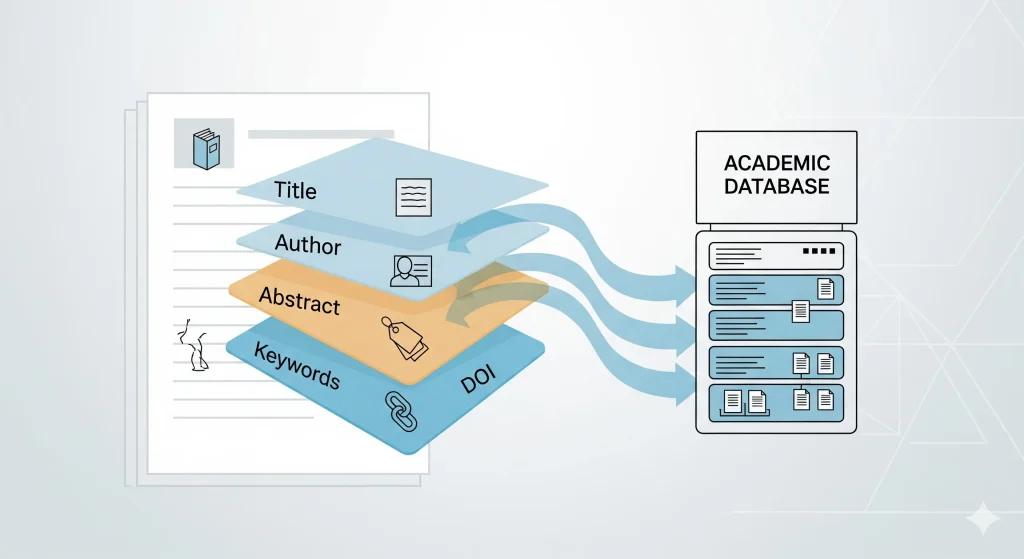
Visibility is all you need in academic publishing. A well-researched paper can be labeled useless if it doesn’t reach its target audience. That’s where metadata formatting services takes the stage. Metadata titles, abstracts, keywords, authors, and citations, dictates how well a manuscript is indexed and found in global research databases.
Sadly, most authors undervalue metadata’s importance and thus lose indexing chances or suffer from poor discoverability. Journals and databases such as Scopus, Web of Science, and PubMed are very demanding with regards to metadata consistency and accuracy. Even slight mistakes, misplaced punctuation, irregular author names, or inadequate keywords can put publication in hold-up or reduce its visibility.
At Mars Publications, we are expert providers of metadata formatting and advanced formatting services aimed at making manuscripts indexing-ready. Aligning metadata with journal and database standards ensures research not just gets published but found, cited, and remembered.
Why Metadata Formatting Is So Important for Academic Publishing?
Metadata is the digital fingerprint of your research. It informs indexing platforms:
What the paper is about (title, abstract, keywords)?
Who did the study (author names, affiliations, ORCID IDs)?
Where the study fits (discipline, journal, publisher)?
How it relates to previous work (citations and references)?
When metadata is entered in the wrong format, databases have a hard time classifying or returning the paper. That translates into fewer readers, fewer citations, and less scholarship impact, even if the research itself is world-class. For career-hoping authors, grant-approving administrators, and tenure-granting committees, proper formatting of metadata is not negotiable,it is a must.
Common Metadata Formatting Errors
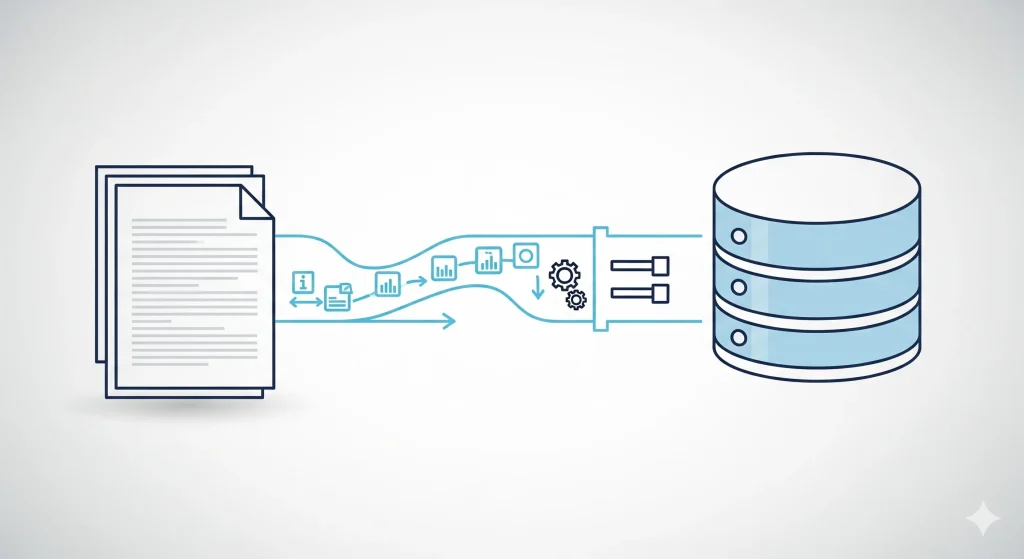
Even seasoned researchers often commit mistakes in metadata. Some of the most prevalent are:
- Inconsistent Author Names
- Using initials in a few instances and full names in others
- Omitting ORCID IDs, which are now being commonly demanded
- Weak or General Keywords
- Too broad words such as “education” or “health,” which lower search relevance
- Omitting discipline-specific keywords that enhance discoverability
- Improper Abstract Structure
- Too lengthy abstracts filled with unnecessary information
- Abstracts that are not in conformity with indexing database standards (structured vs. unstructured)
- Formatting Errors in Citations and References
- Mismatched citation styles (e.g., combination of APA and Vancouver)
- Missing DOIs or incorrect journal abbreviations
- Incorrect Affiliations
- Incomplete names of institutions
- Omitting department or country, affecting indexing accuracy
These errors may be minor, but they can result in a paper being rejected at the indexing phase, or even worse, published but not discoverable by search engines.
Best Practices for Metadata Formatting
To achieve maximum indexing success, researchers have to treat metadata with the same emphasis as their research method. The following are best practices proven to work:
1. Create Accurate and Descriptive Titles
Insert major terms mirroring the scope of the research.
Don’t use abbreviations or jargon that databases do not recognize.
Limit titles to the suggested word limit (typically less than 15 words).
2. Make Abstracts Searchable
Use the prescribed format (background, methods, results, conclusion).
Weave keywords naturally and avoid keyword stuffing.
Ensure the abstracts properly represent the study’s results.
3. Employ Strong, Relevant Keywords
Choose 4–6 keywords consistent with indexing database taxonomies.
Having both broad and niche terms will allow for capturing various searches.
Use Scopus Author Search or PubMed MeSH tools to narrow down keyword selections.
4. Standardise Author Information
Employ uniform spelling and author name format across publications.
Include ORCID IDs for every author.
Give complete institutional affiliations, department, and country.
5. Ensure Reference and Citation Accuracy
Ensure that all references are properly formatted according to the journal’s guidelines.
Insert DOIs wherever possible.
Utilize reference management software such as EndNote, Zotero, or Mendeley to avoid errors.
6. Coordinate Metadata with Target Indexing Databases
Scopus, Web of Science, and PubMed all have their own formatting conventions.
Check the author guidelines of your target journal for metadata needs.
Finally, run a compliance check prior to submission.
How Advanced Formatting Services Support Indexing Success?
Most researchers find it challenging to maintain these best practices routinely, particularly when racing against deadlines and dealing with multiple submissions. That’s where Advanced Formatting Services from Mars Publications come in to play a significant difference.
Our services encompass:
- Metadata Optimisation: Title, abstract, and keyword refinement for optimal discoverability.
- Author & Affiliation Standardisation: ORCID integration and institutional format consistency.
- Reference Accuracy: Fixing citations and checking DOIs for smooth indexing.
- Database-Specific Formatting: Tailoring manuscripts to Scopus, Web of Science, PubMed, and beyond.
- Final Compliance Checks: Avoiding last-minute rejection because of missed technical details.
By covering these areas, we remove indexing barriers and enhance the long-term visibility of published studies.
Why Researchers Tend to Ignore Metadata?
Several authors presuppose that once they submit their paper to a journal, it will be indexed properly. The truth is that journals depend on proper author-supplied metadata for efficient processing of submissions. Without proper metadata that is strong or consistent, indexing systems will not be able to classify the paper properly.
At other times, researchers focus on the quality of content and leave formatting as an afterthought. Sadly, databases and citation systems run on technical accuracy, and minor formatting mistakes greatly reduce research reach.
Mars Publications: Your Partner in Indexing Success

At Mars Publications, we believe that outstanding research should be recognized throughout the world. Our Advanced Formatting Services are set up to provide your work with professional sheen necessary for top-tier journals and databases. With our expert assistance, your manuscript will not only comply with publication standards,it will be top-ranked in search results and citations.
Whether you are an early-career researcher or a seasoned scholar, maximizing metadata is the quickest way to increase your academic reach.
FAQs
1. What is metadata in scholarly publishing?
Metadata comprises titles, abstracts, author names, affiliations, keywords, and references, key items upon which databases rely for indexing.
2. Does poor metadata influence citation counts?
Yes. If metadata is incorrect or inconsistent, your paper will not be seen in associated searches, which will restrict readership and citations.
3. Do all journals share the same metadata requirements?
No. Every journal and database (Scopus, Web of Science, PubMed) has its own formatting requirements.
4. How do I select effective keywords?
Employ a combination of broad and specific keywords, based on subject taxonomies such as MeSH (medical disciplines) or Scopus subject categories.
5. Does Mars Publications assist in metadata formatting upon submission?
Yes. We provide Advanced Formatting Services at all phases, pre-submission, revision, and resubmission.
Final Thoughts
Metadata is not merely a technicality; it’s the connection between your research and the world. Inadequate metadata can bury even superior research, but optimised metadata guarantees visibility, citations, and academic fame.
Advanced Formatting Services of Mars Publications ensure that your manuscript not only surpasses journal requirements but also attains maximum indexing success.
Your research has a place in the world. Don’t let format errors restrict its visibility.