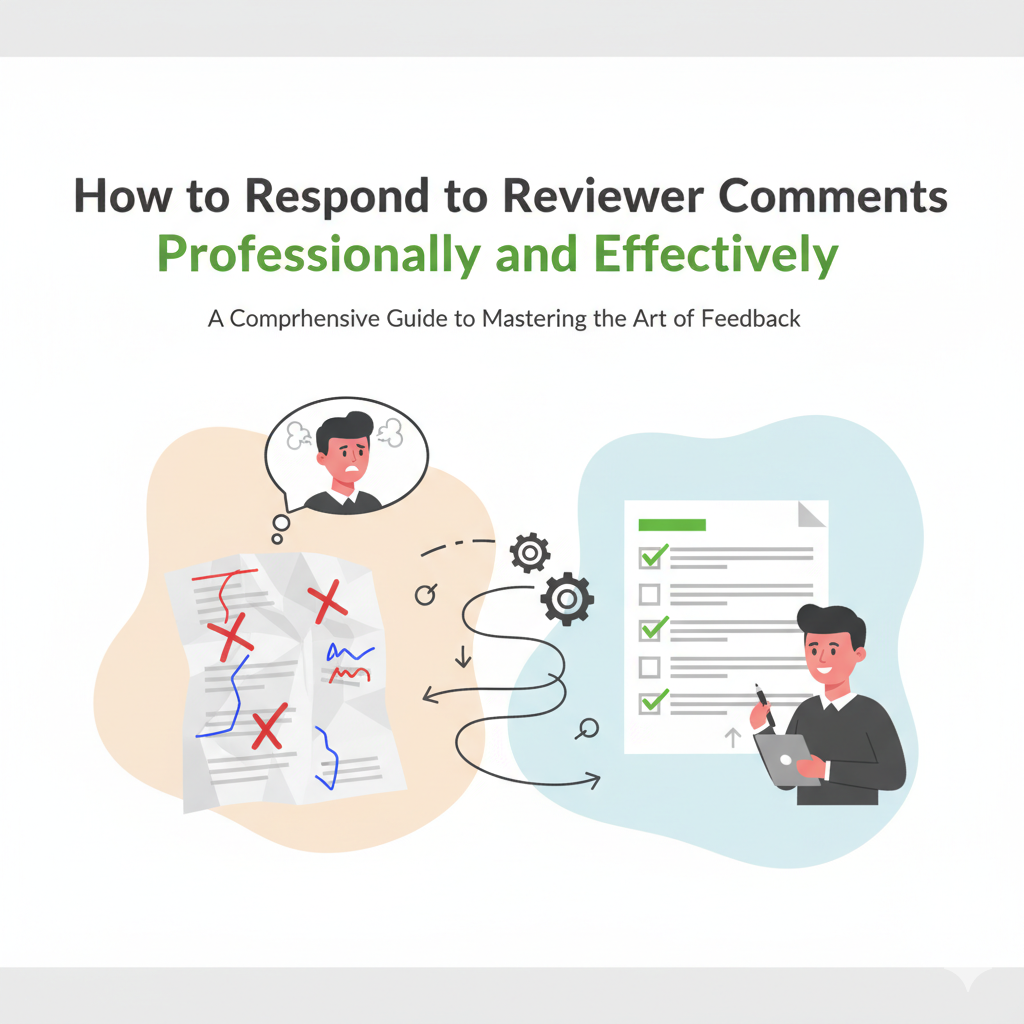
Sometimes it may seem like you are walking a minefield trying to get reviewer comments on your work, be it a creative project, book manuscript, or scholarly article. These comments may be confusing or even frustrating but they may also be enlightening and helpful. Whether your effort is successful or not is, however, determined by your response to these comments. A well-edited and successful response can make your product better, demonstrate that you welcome critique, and develop a positive relationship with reviewers.
This is a thorough guide to help you become an expert in answering reviewer comments:
1. The Art of Initial Reaction and Stepping Back
It can be stressful to have reviewers comment. The urge to respond immediately should be resisted, although your initial thought may be to justify your work or to be disheartened. The best action to take is to take a deep breath and read through all of the comments without trying to make sense of them. This initial reading is merely to be very general. Then it is highly recommended that you take some hours or even a day off your work and the criticism. The period gives you opportunity to get your mind straight and take time to be objective and clear when responding to the comments. Remember the final goal of reviewers is to help you to work better and thus you should strive to view their criticism as a good opportunity to work better.
2. Arranging and Dissecting the Comments

You need to take a methodical approach after you are ready to engage with the criticism. The best way is to make a new document and answer each comment separately. You can copy to this updated document the comments of each reviewer in order to be sure you are not leaving anything out. As you read through the remarks, you should critically and attentively read each comment in order to fully understand the underlying issue. Does the reviewer want a simple explanation, new analysis or major change in your methodology? You need to understand what their primary concern is because you may be able to go about it differently than they have suggested and still achieve a better result.
3. Developing a Targeted and Expert Response

As your answer document is a formal communication, it is important to remember that your tone should remain professional at all times. And thank the reviewers in advance, they had time and very valuable things to say. Then deal with each and every comment. But you have to do something even when you choose not to change anything, you must answer the comment with a detailed explanation. An example is as follows: We have changed the introduction on page 2 to specify the main aim of the study. Be able to articulate your reaction to each criticism. Also, you must include on your updated document where you make the change, e.g. please see lines 15-18 on page 2. Avoid defensive language and talk openly and in a modest tone. The primary aim of your response should be to demonstrate how you have modified your work in respect to the criticism.
4. Managing Conflicts with Compassion
At some point you are going to disagree with what a reviewer has to say. When this happens, you will first need to review your stance and determine whether you have missed any critical points. If you still do not want to make the recommended change, then you must have a good, fact based explanation. This may involve stating a process restriction, citing previous literature or describing the way the proposed change will weaken your research. You can say, e.g., We like this suggestion but it will weaken our main argument of the paper because it is not the focus of our research. Always make your argument polite and sound, and when you can, give them an alternative that would address their fundamental problem, without taking the work away.
5. Completing Your Work and Making Sure It Is Coherent
Be sure to review a final time before attaching your updated text and answer document. Ensure that your response paper is free of typos, grammatical mistakes and vague language by carefully proofreading. Check once more that your revised manuscript shows all the changes that you have pointed out in your response. You can also send a draft of the work with the track changes turned on to make the changes appear instantly to the reviewers. This step simplifies the task of the reviewers to a great extent and shows your productiveness. Professional and thoughtful response gives you a high chance of getting your work accepted and it also demonstrates that you value the peer-review process.