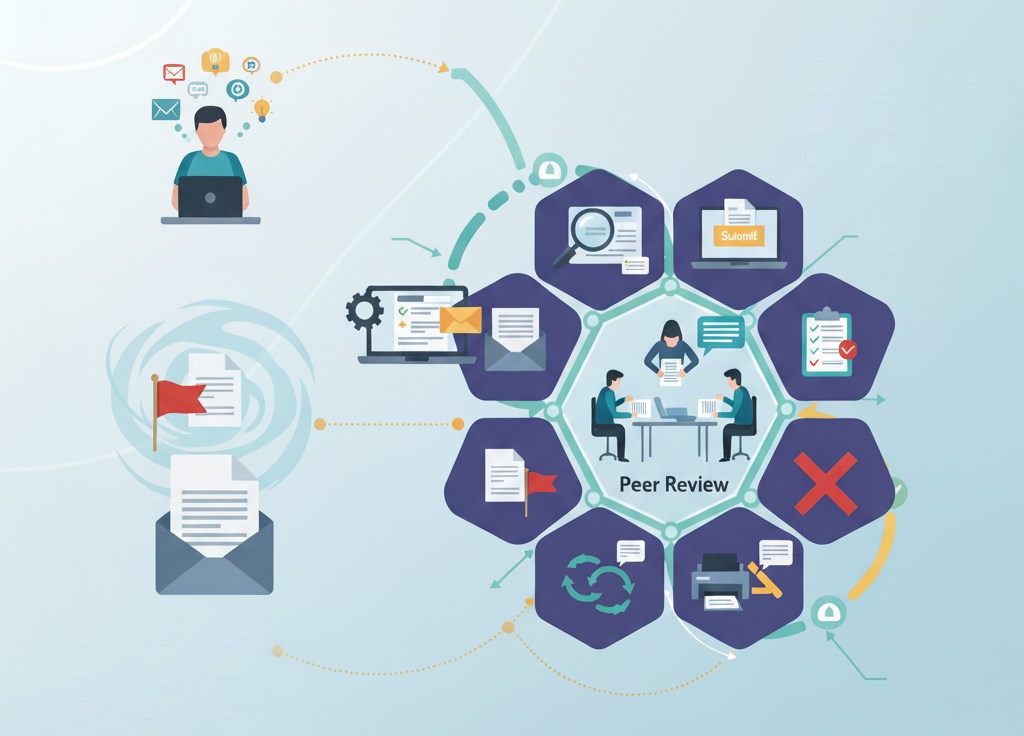
The publication of scholarly research can seem like a complicated maze. A clear and properly designed plan can then ease this complexity, though enabling the researcher to work with the first draft and arrive at the final paper much more easily and giving greater chances to succeed.
This guide breaks down the whole process of publication, including draft, editing, submission and peer review. With the help of this roadmap, the researchers may steer toward publication in reputable journals available in Scopus and Web of Science. At Mars Publications, Research Paper Writing Services are available that can transform a manuscript into a successfully published research paper.
Stage 1: Establish a Firm Base
Before the writing process starts, a detailed plan has to be drawn. A solid frame of reference facilitates the other processes of writing the manuscript.
- Define Your Research Question: Start with a specific and narrow goal. The study should also be novel and full of high academic value; an unclear question will only undermine the study.
- Select Your Target Journal Early: The venue is a choice of strategy, determining the structure and tone of the manuscript. It is necessary to test the journal scope, audience and the levels of acceptance in the initial stages.
- Check Author Guidelines: Failure to do this is harmful. All journals have specifications of unique requirements in terms of structure, style and words.
Compliance with these rules at the very beginning proves the evidence of professionalism and may simplify the review process. Services like Mars Publications might help in the explanation and implementation of these particular requirements.
Stage 2: Add Clarity and Impact in Writing
Good ideas are enhanced by effective communication. The logical structure and the precise articulation are what are key to producing an impressive impact.
- Develop a Logical Framework: Use the traditional IMRaD model (Introduction, Methods, Results, Discussion). Such a familiar structure means ease of navigation and understanding for the reviewers.
- Emphasise Readability: Use short, active sentences and reduce unnecessary jargon. It is to make the research accessible and preserve its scientific rigour.
- Highlight Your Contribution: Clearly state how the research answers a gap in knowledge, its relevance, and applicability to the real world.
Focusing on this aspect makes the key point of the manuscript more convincing; the next-generation publishing services can assist in making the contributions clear and convincing.
Stage 3: Polish Your Manuscript
A first draft is simply a rough draft of a manuscript. This is the stage of careful refinement.
Writing mistakes and poor wording can guarantee a rejection outright. It can be professionally edited so that it is understandable and complete.
- Check plagiarism: Use plagiarism detector programs like Turnitin or iThenticate. Manuscripts with a similarity index of more than 15% on the purview of most journals will be rejected.
- Format Figures and References: Strictly comply with the target journal’s style guide in terms of the visual items and reference formats. Consistency is an indication of precise attention to detail.
- Effective Cover Letter: The cover letter is actually a sales pitch to the editor. It must be a brief expression of the novelty of the manuscript and its appropriate fit to the journal. It could be the case that the professional service produces strong cover letters which can draw the attention of the editor.

Stage 4: Submission and Peer Review
The most important fidelity is submission fidelity. This is the key stage in which concentration at such a stage helps in reducing unnecessary delays.
- Submit Well: Within the specifications of the journal electronic uploads, make certain that all the required elements: manuscript, figures, and cover letter are uploaded correctly. The wrong file formats may delay the review cycle.
- Know Peer Review: The manuscript is usually reviewed by a single reviewer or by a couple of reviewers using single or double methods. Reviewers evaluate originality, sound methodology and clarity.
- Respond to every comment: Be professional in responding to comments about your business on reviews. An acceptable response letter is often well-built. The application of professional advice may positively influence the process of reviewer feedback.
Stage 5: Revision and Acceptance
After passing peer review, the manuscript will finally be accepted. The final measures are paramount.
- Revise Strategically: Work out the commentary by Reviewers in order. Make it clear where changes have been made in the manuscript.
- Check Your Proofs: After acceptance, proofs will be mailed by the journal. Review all the information, such as typos, placement of figures, and details of the author, to rectify any residual errors.
- Take advantage of Online First: Several journals are publishing online articles that are not in issues, and thus, the accrual of citations may be achieved earlier.
Stage 6: Boost your work
As the article is published, it is necessary to track its dissemination and impact.
- Publicise Your Study: Place the publication on academic and career sites like ResearchGate, LinkedIn and Twitter with keywords related to the desired outcome to gain greater visibility.
- Track Your Impact: Use bibliographic databases, such as Google Scholar, Scopus, and Web of Science, to track citations. Citation metrics contribute to getting future funding and research partnerships.
- Connect Your Network: Publication creates new possibilities for academic discourse and collaboration. Use the fame of your work to create and build on new engagements. Post-publication strategy services can help to maximise the exposure of your research.
Make Your Journey Easy
The way to a scholarly publication is a complicated one in itself. With extensive assistance throughout the planning to the conclusion, it is possible to simplify it.
- Smart Journal Selection: Select the most appropriate journal in terms of content and scope of the manuscript.
- Manuscript Editing by Experts: Editing of the language and structure, and refinement to high academic standards.
- Peer Review Navigation: How to respond to the comments of the reviewers.
- Confidential Resubmission Support: Can help in the actual resubmission process and the confidentiality of the same.
Such services are in line with international journal standards and are responsible for an anonymous and professional partnership.
Conclusion
Publication is not a one-time event, but it is the climax of a structural strategic process. All steps, including preparation, planning and even pre-emptive post-publication promotion, add up to a successful result. Take this path accurately and carefully, and then you will have a better acceptance rate and academic presence.